what natural material plays a key role in the memorial to civil rights? water stone dirt sand
I've noticed a gradual return to more natural outdoor play areas for children beyond the past few years which is wonderful just I know it tin seem overwhelming when it comes to designing or revamping the outdoor environment when y'all tin can't afford a landscape designer or huge labour costs.
For those that can beget to work with a landscaping squad and take the budget for those big ideas I say become for information technology – they create some wonderful spaces (just do a Google or Pinterest search to see what I mean)!Still, for those of us who don't take that sort of budget, fourth dimension is limited or y'all work as a Family Day Care Educator so your lawn is also your outdoor play expanse – I have some ideas and strategies in this new 'Designing Outdoor Spaces' weblog series to help you at least get started and move forrard at a step (and price) you can handle yourself!
If you missed Part one (Assess & Reflect) you lot can start the series HERE.
In the first blog post in this series I showed you how to assess what yous already accept, what y'all want, why you desire it and how yous are going to make it happen.
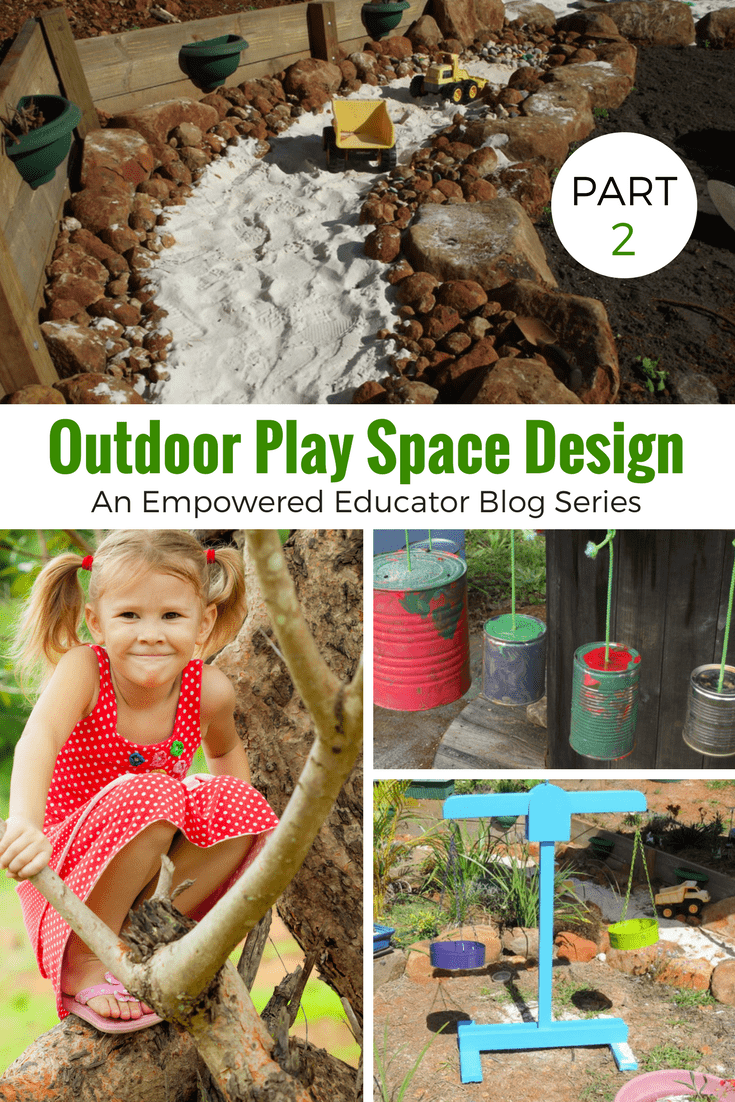
In this 2d part of this series I'1000 going to be sharing some tips, strategies and action steps to help get you started with the designing and creating office of your new natural outdoor play area.
A little disclaimer for you before we brainstorm – I am in no style a qualified landscaper or designer of whatever kind…merely a Mum and early childhood educator who understands how and what children need to embrace outdoor play…and I don't heed getting my hands dirty in the garden or in our case lots of red dirt!
Let'south get into Role 2 of the Designing Outdoor Play Spaces serial! Work your way through the steps outlined beneath, pick out what you feel would exist helpful to you lot, add together them to the assessment you lot fabricated later reading through part ane and you are going to take that outdoor play space sorted in no fourth dimension!
Step ane – Sensory, Tranquillity & Cloak-and-dagger Spaces in Natural Outdoor Play Areas.
One of the first things I like to do when creating a new play area from clay or overhauling an existing infinite is think almost how I can pause up the space into smaller areas and what upkeep friendly materials or planting I could use to do this. I advise starting with the essentials – in my opinion this includes finding ways to incorporate smaller sensory, quiet and 'secret' spaces throughout the larger outdoor area.
Why is it important to design smaller spaces and interest areas in an outdoor environment?
- To support the full range of developmental needs and learning outcomes.
- Creates opportunities for educators to gear up up dissimilar invitations to play.
- Encourages the exploration of different interests & needs.
- Play can evolve in smaller groups or individually – can lead to more collaboration, trouble solving and cooperation equally they direct their own play.
- So children can seek privacy & and let their play to evolve imaginatively without fear of constant adult interference.
- Helps to promote an atmosphere of engaged and open ended play.
- Clearly defined spaces can lead to either loud, active, or quiet play. Children of all ages come up to empathize the boundaries and possibilities of each infinite and feel a sense of ownership equally they explore and extend play.
- Placidity or sensory spaces tin support children who might be experiencing sensory overload during outdoor play and provide ameliorate opportunities for self regulation and calming cocky.
- Complements & extends on the indoor learning currently occurring within the plan.
- Minimises opportunities for conflict as children are able to find their own space to explore individually or as part of a group using the different resources and tools available in those areas – or bringing their own to the infinite.
- Allows for spontaneous pocket-sized group experiences and intentional didactics opportunities.
There really are no "RULES" to follow. Creating unlike spaces (even if your outdoor area is already small) is but something I have plant works very well for all ages – especially when sharing the environment beyond multi age groups!
Think nigh the assessment you fabricated of your area and what you identified equally beingness important to you equally you create your spaces. You know all-time the space, budget, helpers and children yous have to work with and so this is truly a step that will differ for every educator, parent or service. Your answers to the following questions will help you place where to start.
- What are some of the different areas you might similar include to provide a quality natural play infinite and learning environment?
- What areas currently work inside?
- What has been working so far for electric current ages, stages,interests?
I suggest writing down your answers then working through my list of ideas beneath to aid you with a footling design inspiration!
Consider the following ideas to assistance get yous started ….
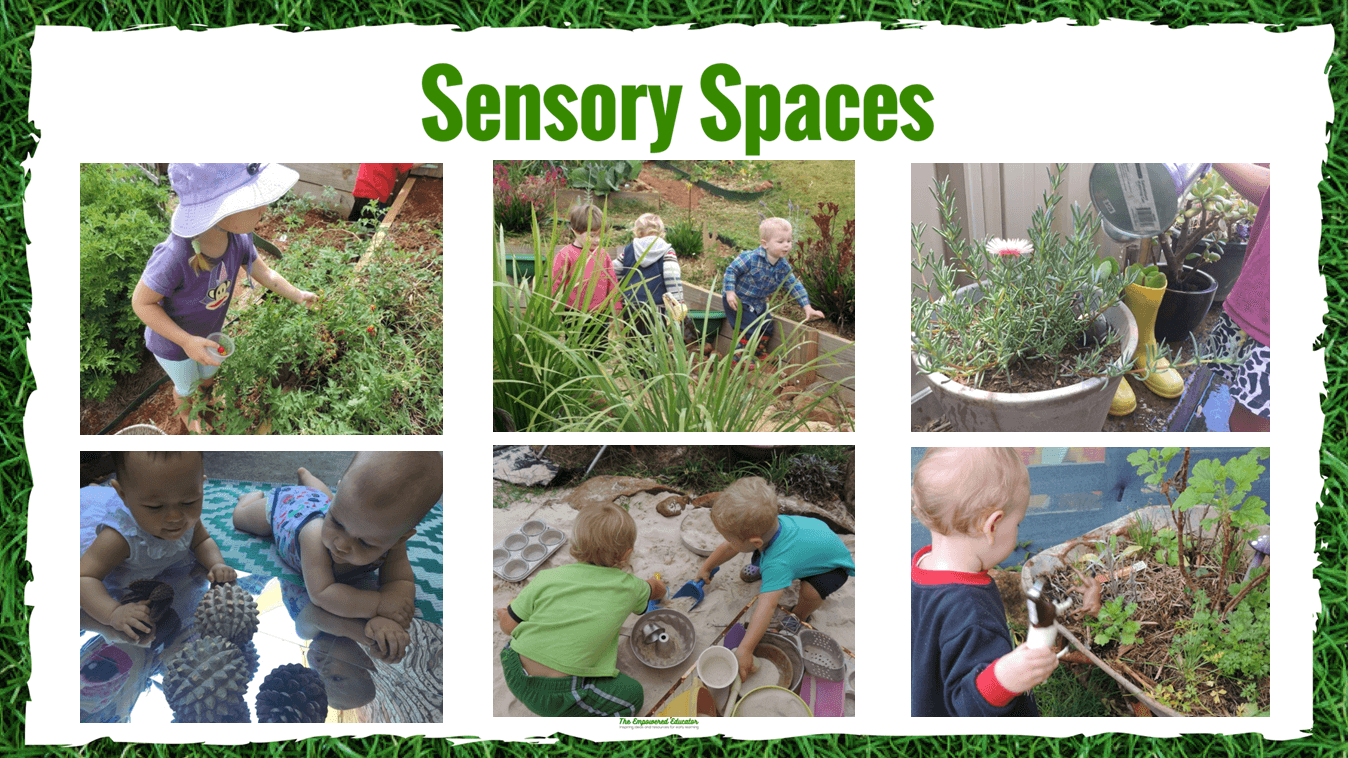
- Sensory Spaces – think virtually planting colourful flowers, different smelling herbs, grasses and bushes with unlike textured leaves to excite senses as they castor past. You might likewise include gravel, water or other simple sensory elements.
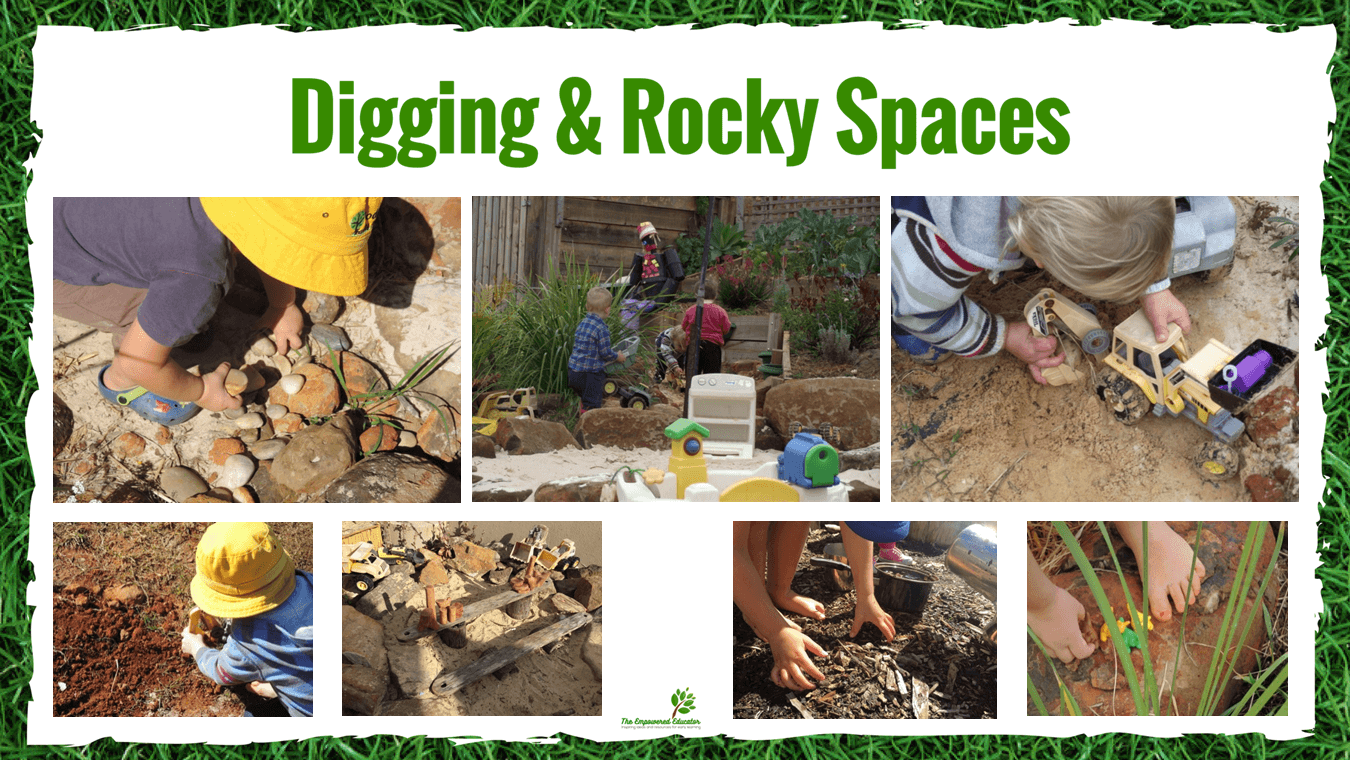
- Digging & Rocky Spaces – stones, pebbles, bush rocks for climbing, gravel, dirt, mud.
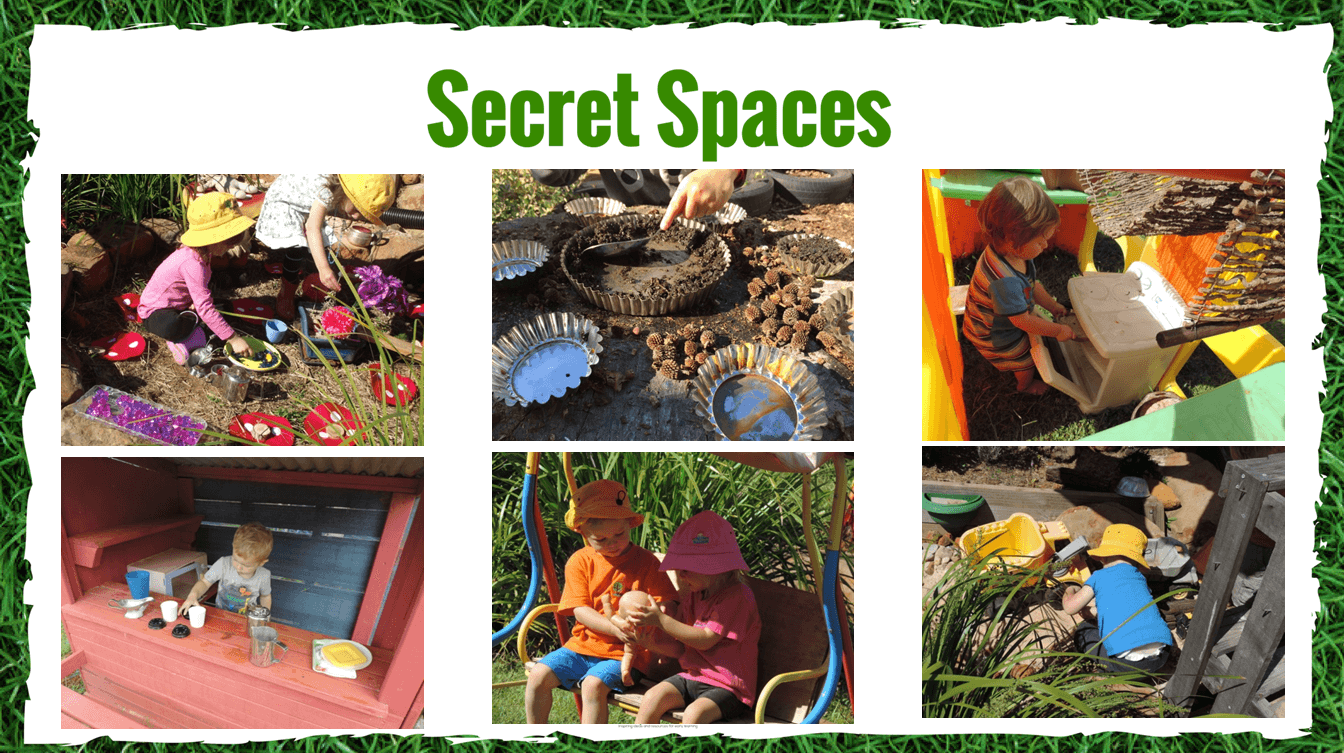
- Hole-and-corner Spaces – hands created with screening plants, trees, mud kitchens, logs, stumps or pallet 'walls' that enclose a space but still allow for supervision from a distance!
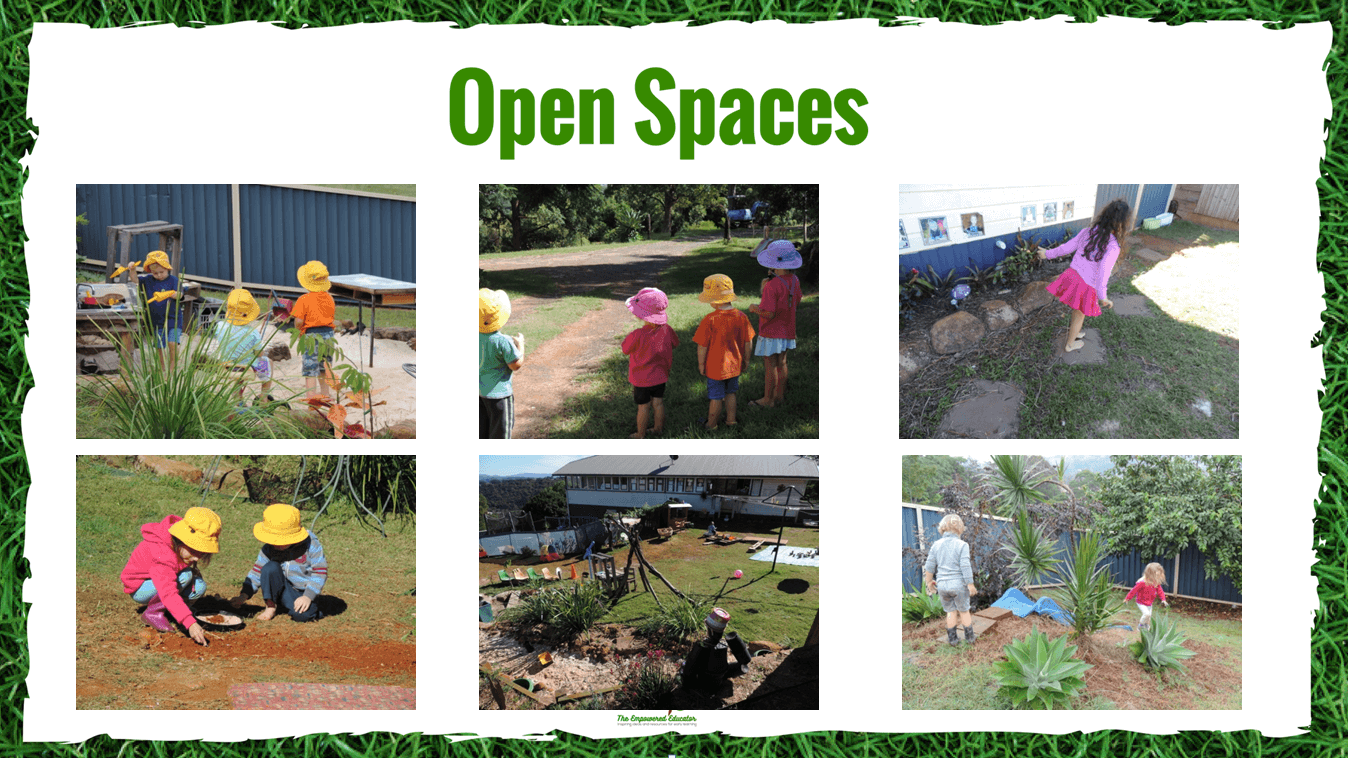
- Open Spaces for rolling, running, noisy and agile games and play.
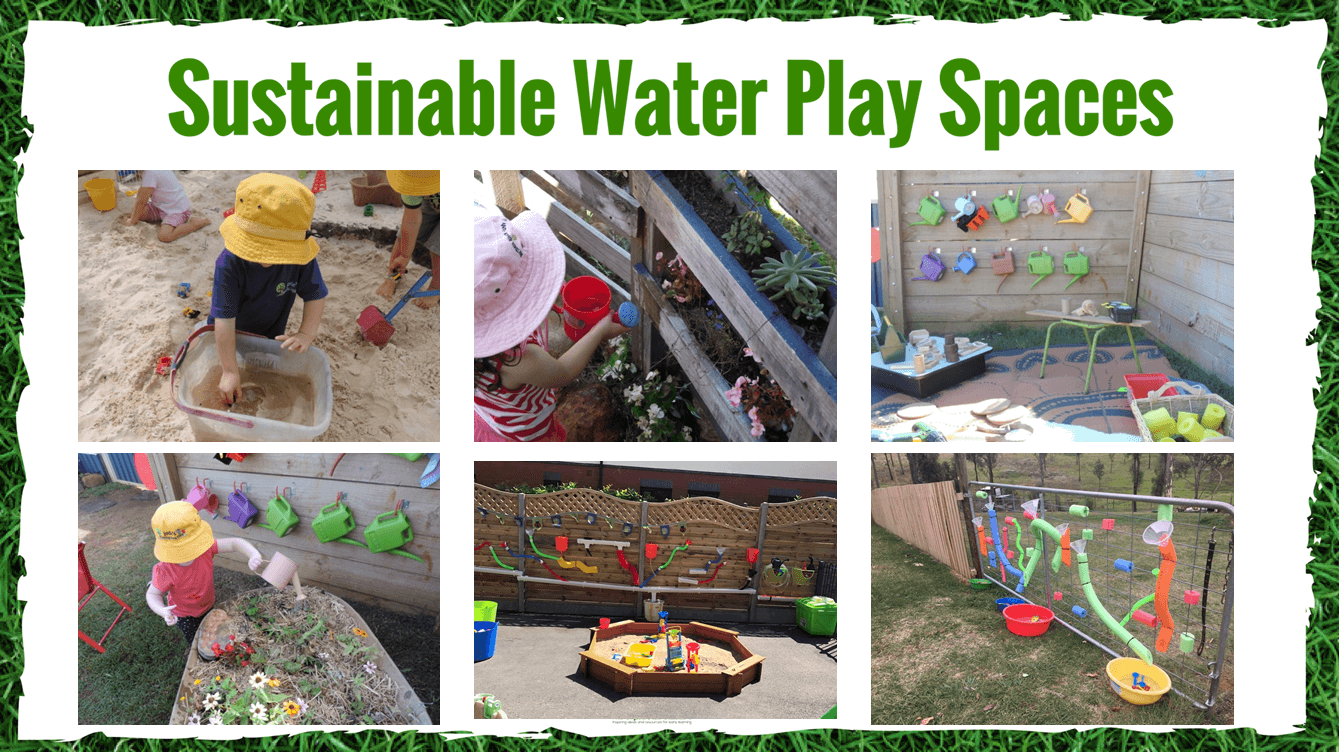
- Sustainable Water play spaces – think about water tanks, watering cans, water troughs setup to reuse water on gardens at the terminate of the 24-hour interval, hand pumps, systems that recirculate the water most sandpits or mud play areas.
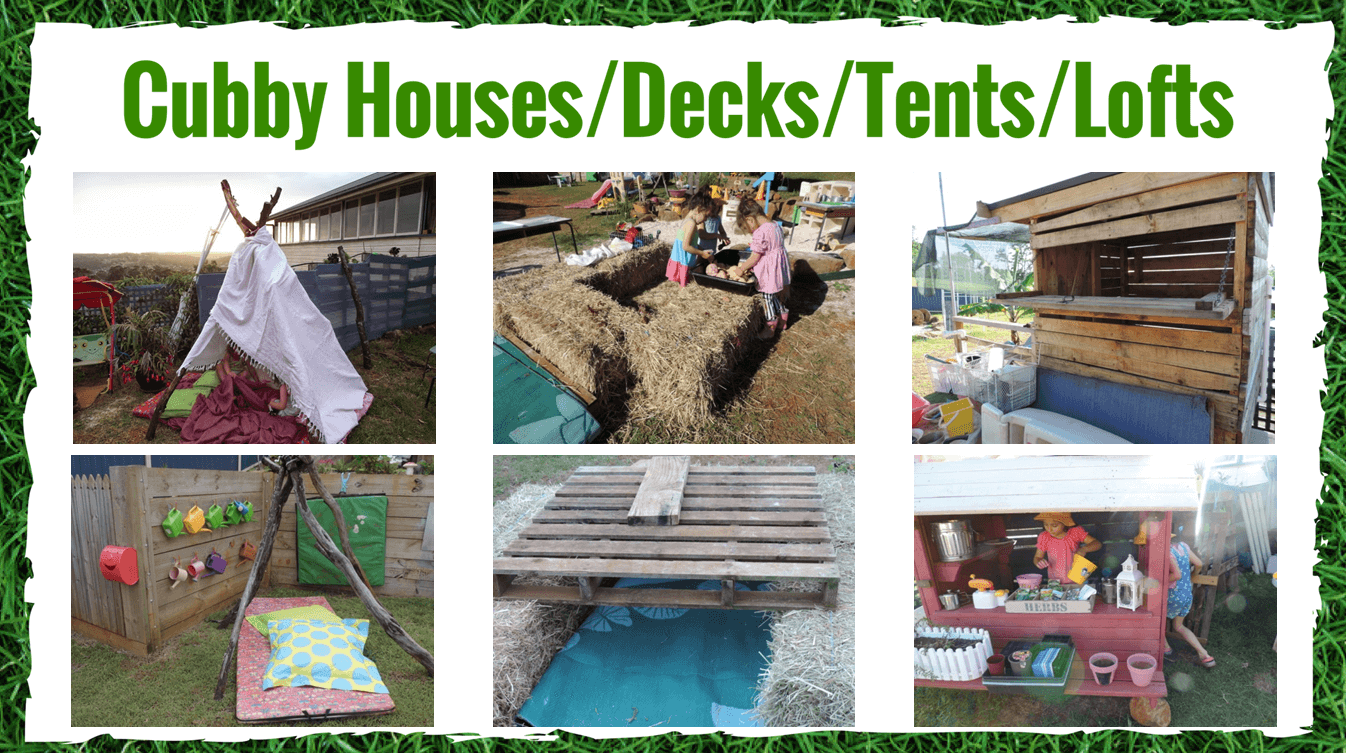
- Cubby houses/tents/lofts/decks – utilise your imagination and lots of recycled or upcycled materials to build with. Provide residuum by making certain to provide open concluded materials for the children to access to brand their own constructions.
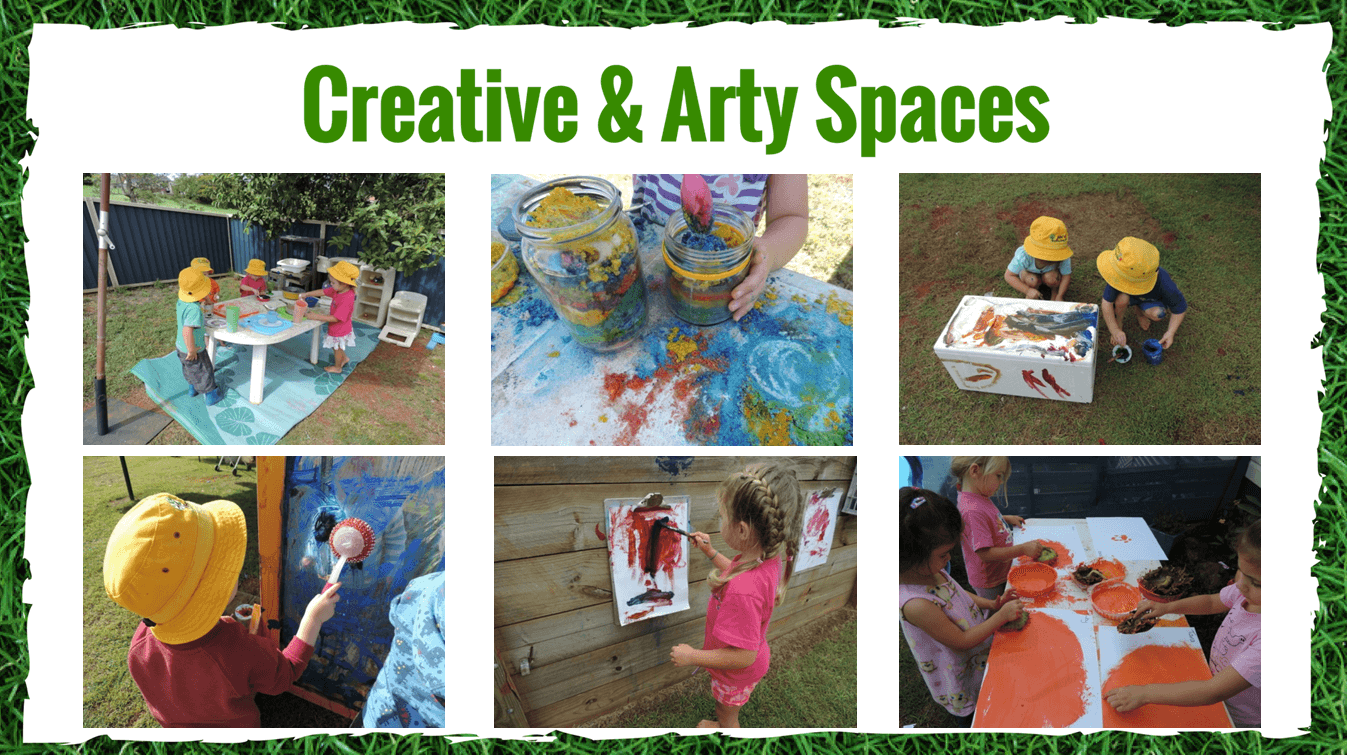
- Creative and Arty Spaces – provide materials for children to express themselves creatively outdoors at any time during play. As well apply for structured craft activities allowing them to run off and play when finished or revisit the activity throughout each session. Create display areas outdoors for children's piece of work.
- Challenging spaces – Incorporate materials that encourage children to explore and challenge themselves. Call back nearly the benefits of the challenge v the possible risks involved every bit you design.
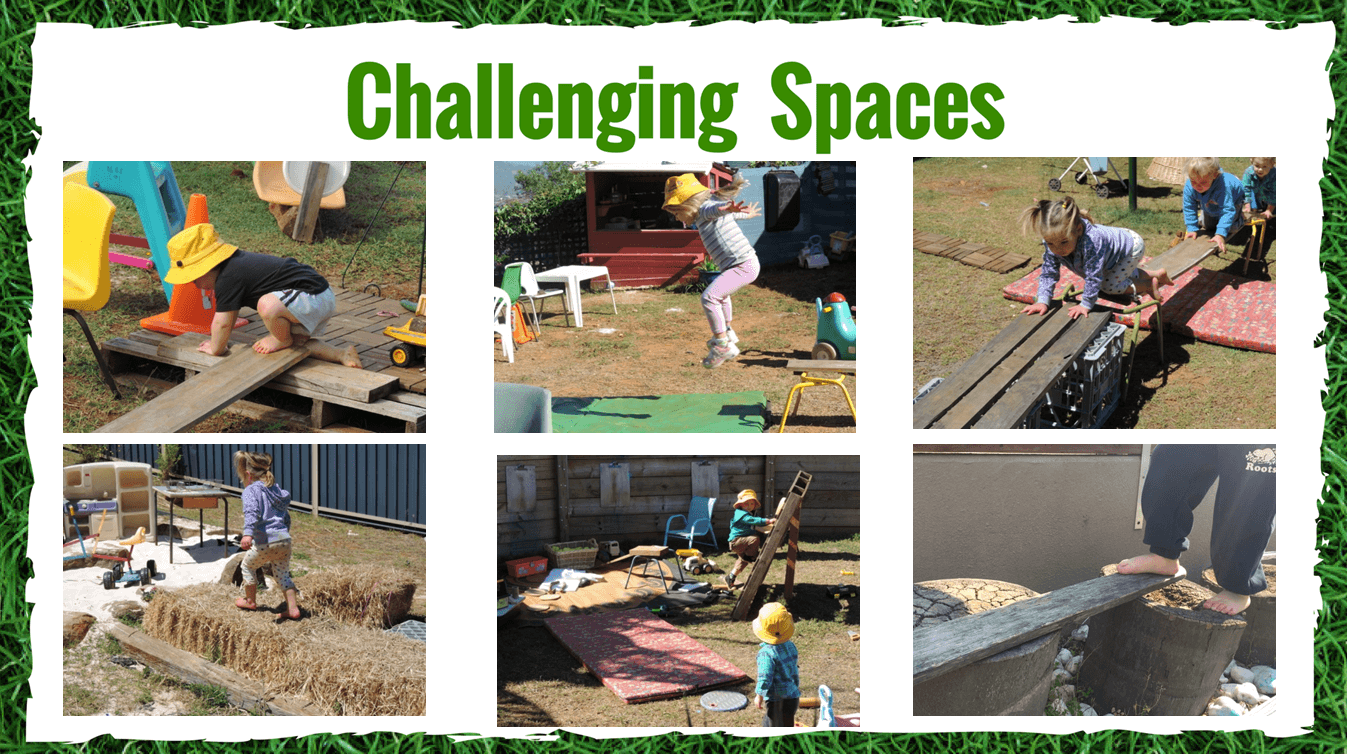
- Climbing and balancing spaces -if updating an older space use the climbing trestles and planks you lot have in dissimilar ways -add to open ended materials like tyres, logs, stumps, pallets, ladders and more!
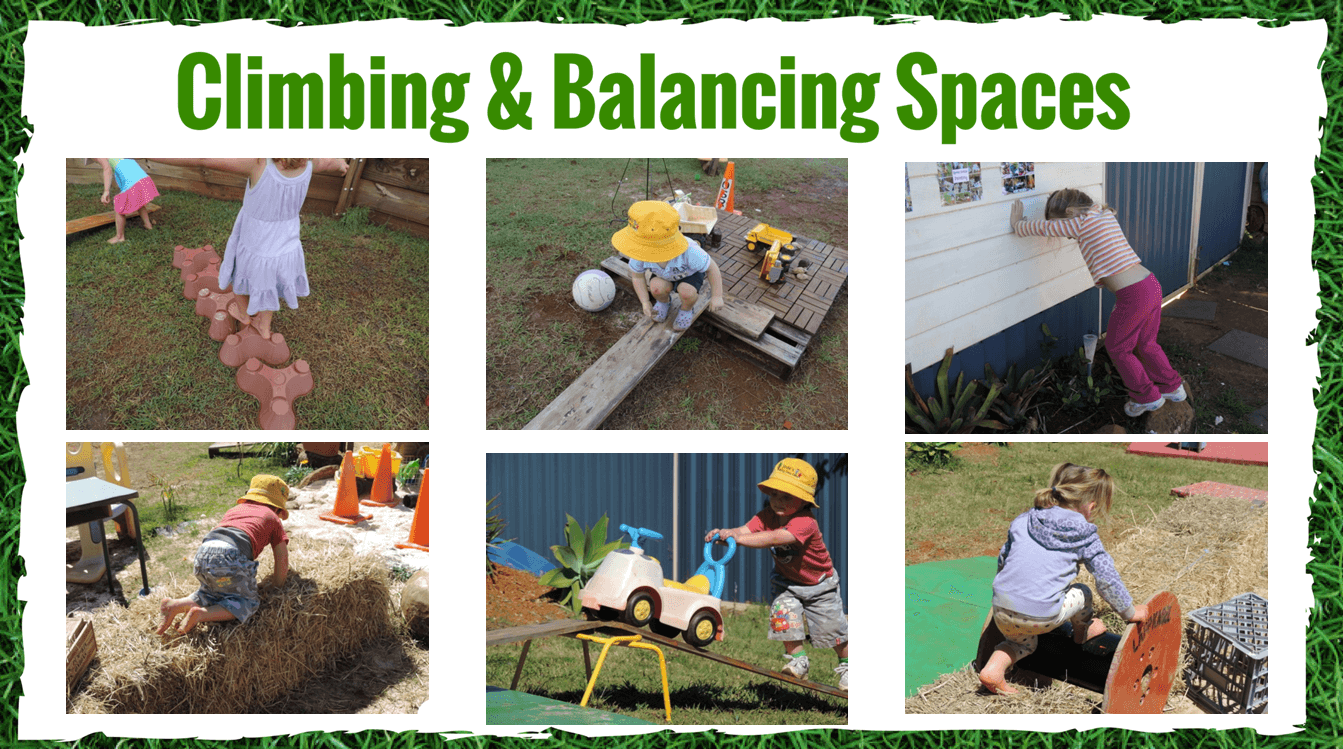
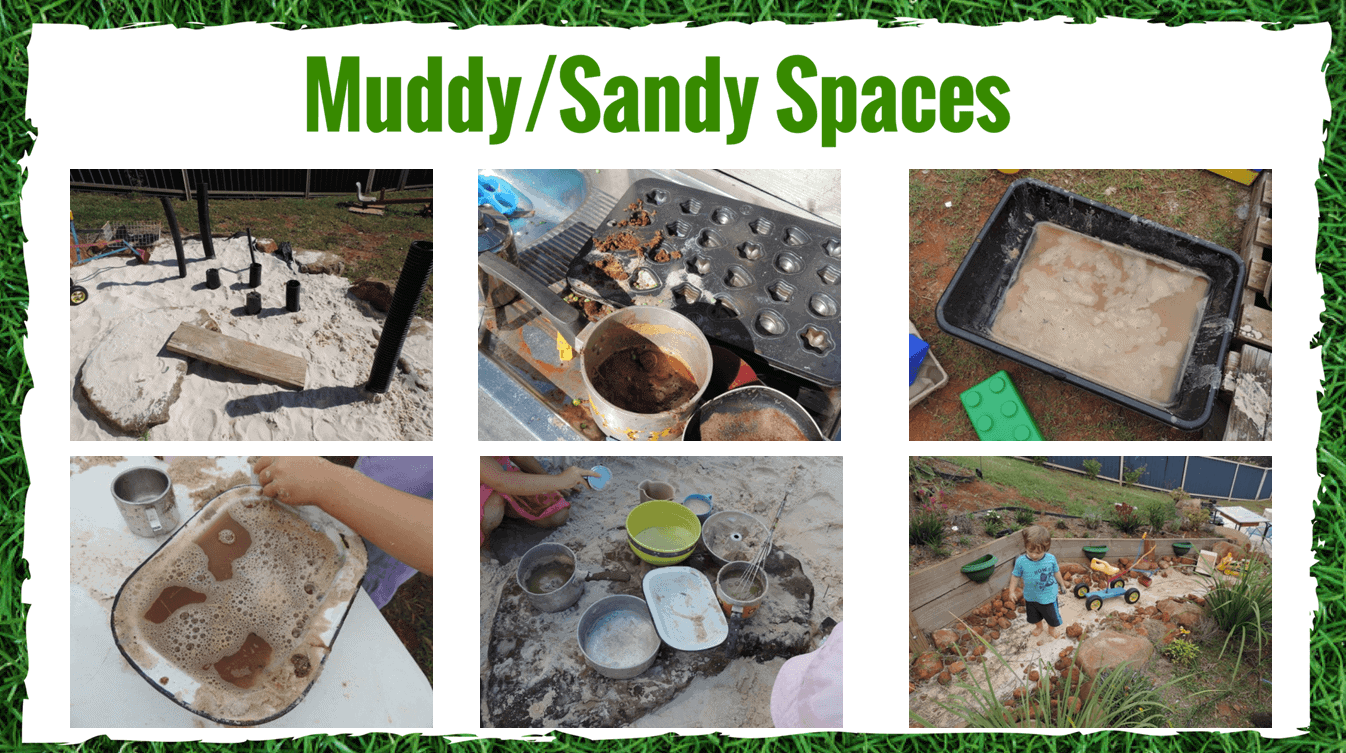
- Muddy/sandy spaces – Brand sure they are easy to access and provide opportunities for children to add to the space with other materials.
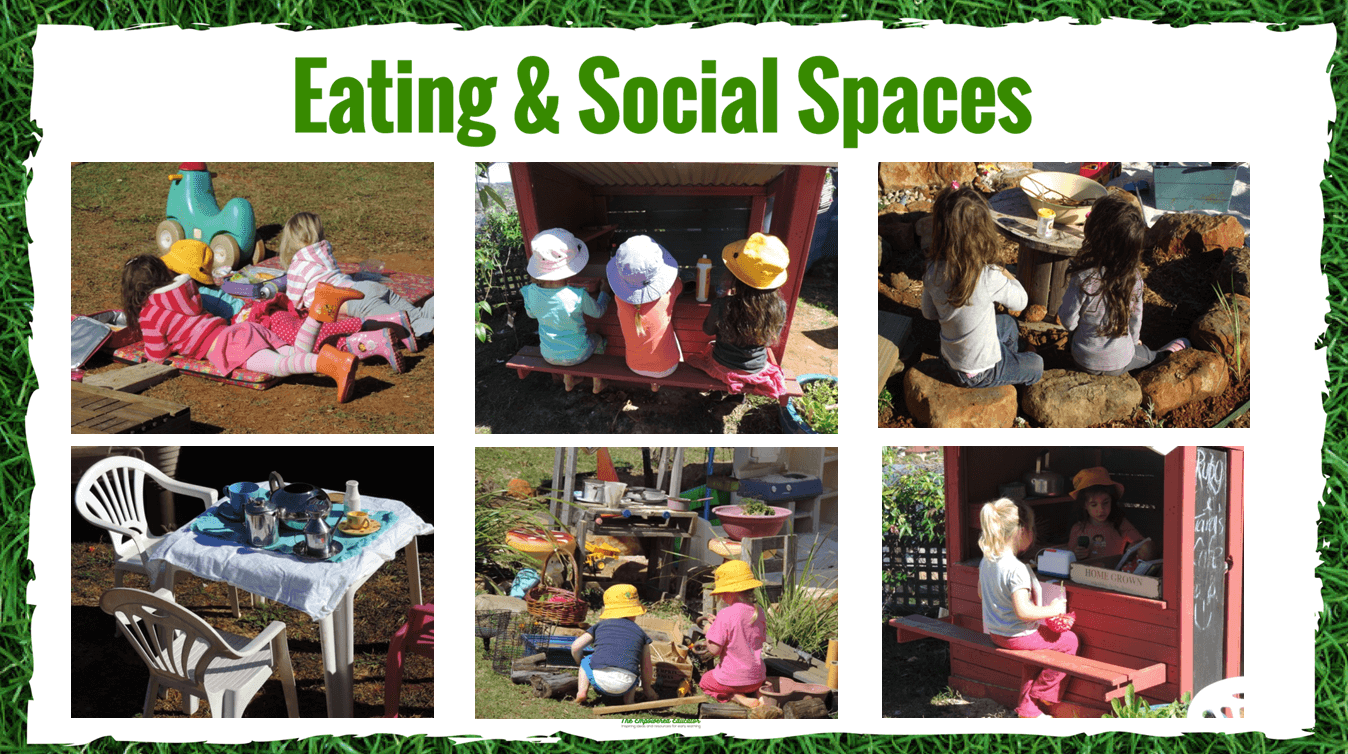
- Eating and social spaces – eating outdoors is always more fun and a whole lot easier to clean upwards! Think about shade, logs or stumps for seating and makeshift tables or just an open area to lay downwards a coating. Simplicity is the key here!
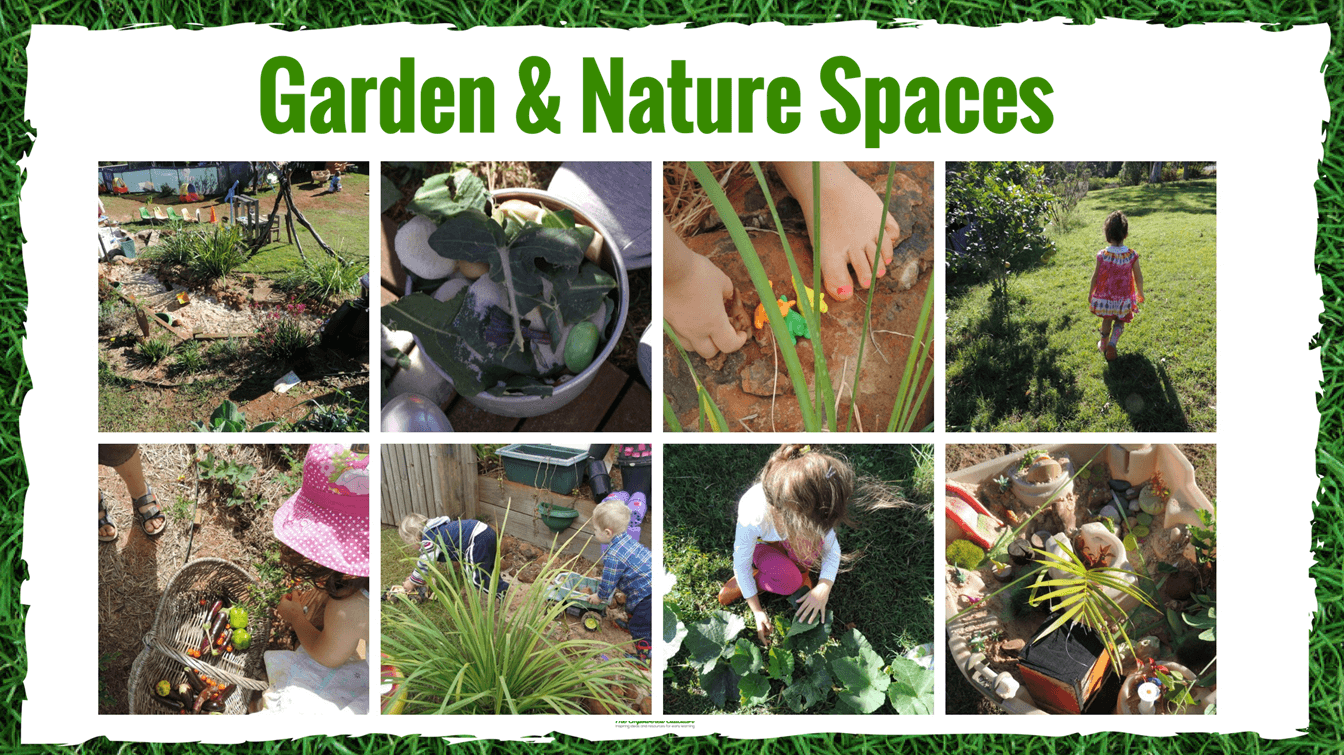
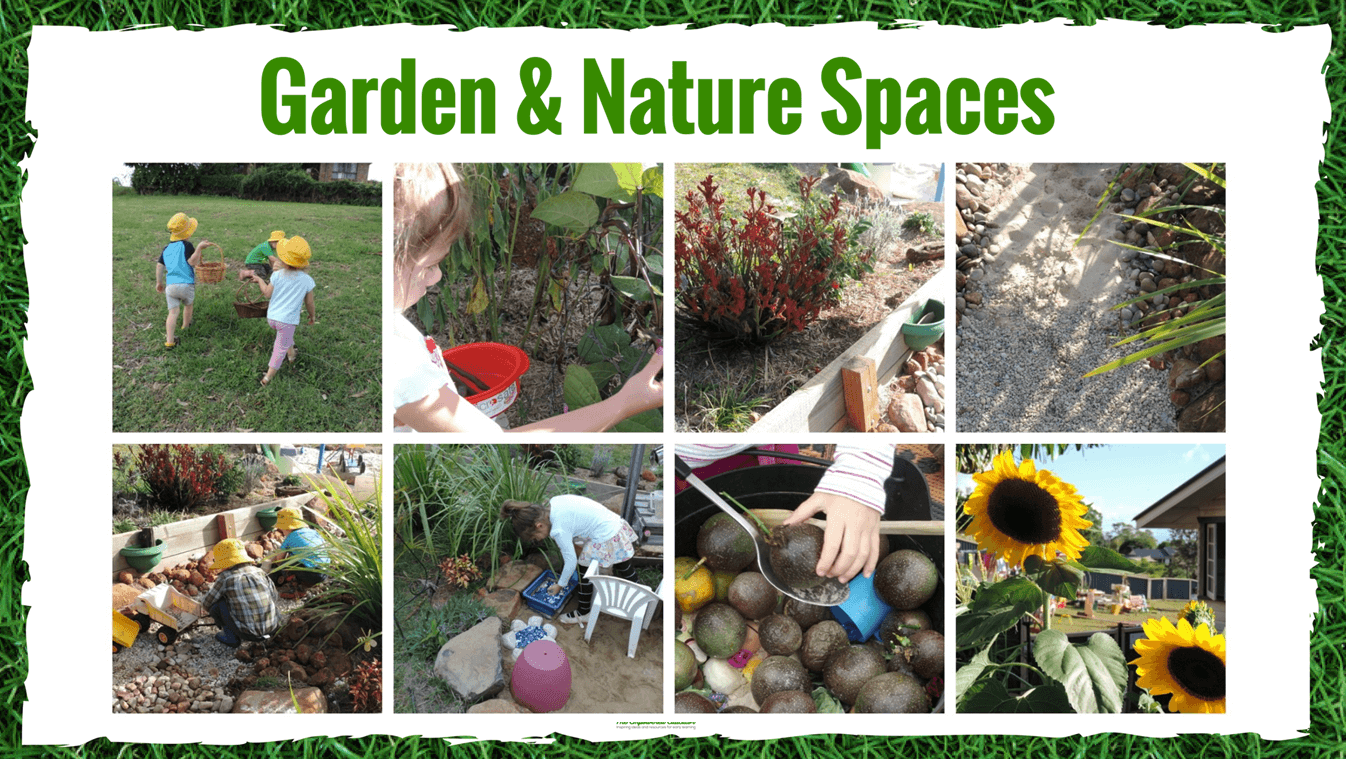
- Garden and nature spaces -if you have no room for large gardens or planting endeavor to at to the lowest degree add some greenery, vegetables, flowers or herbs arranged in some pots or baskets of natural materials for the children to touch, investigate and access.
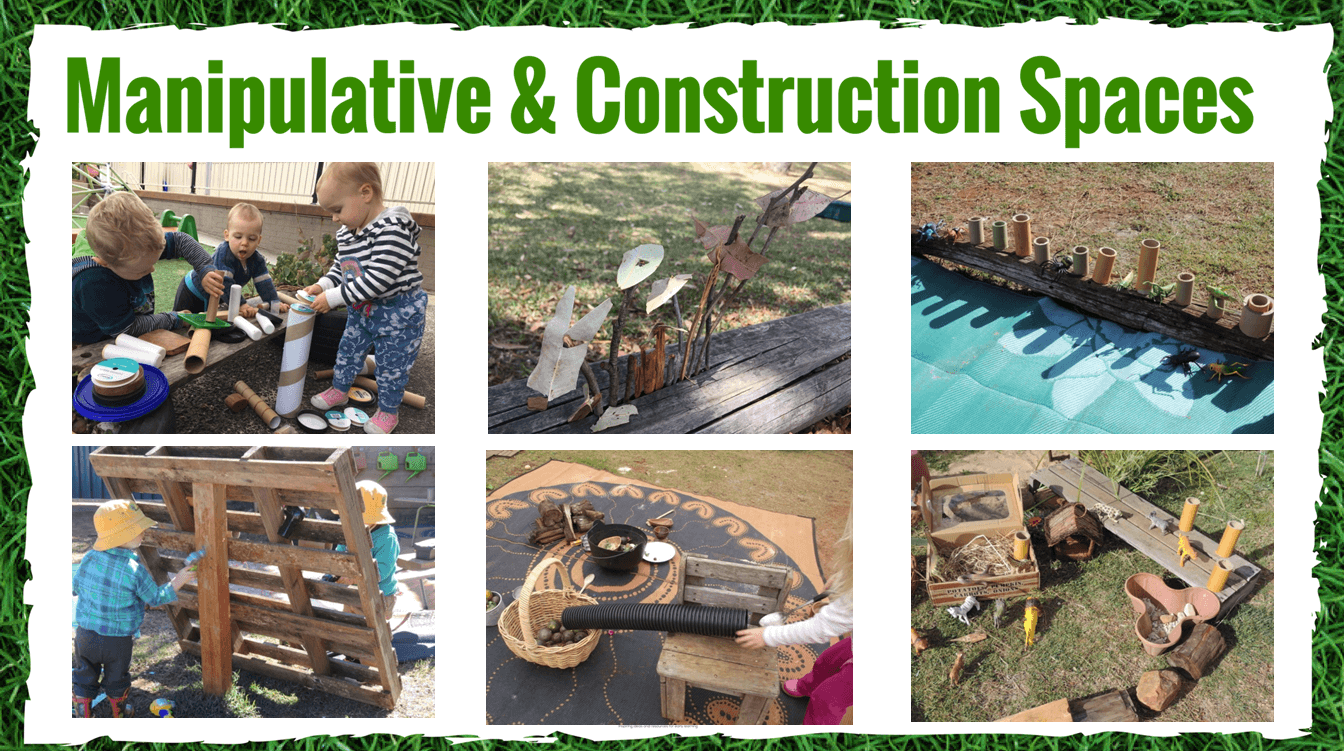
- Manipulative and structure spaces -blocks, tinkering, tools and building isn't but for indoor play in the block expanse! Get creative – set aside construction materials to exist stored outdoors. Add buckets of loose parts and recycled items for children to explore and add to their manipulative play.
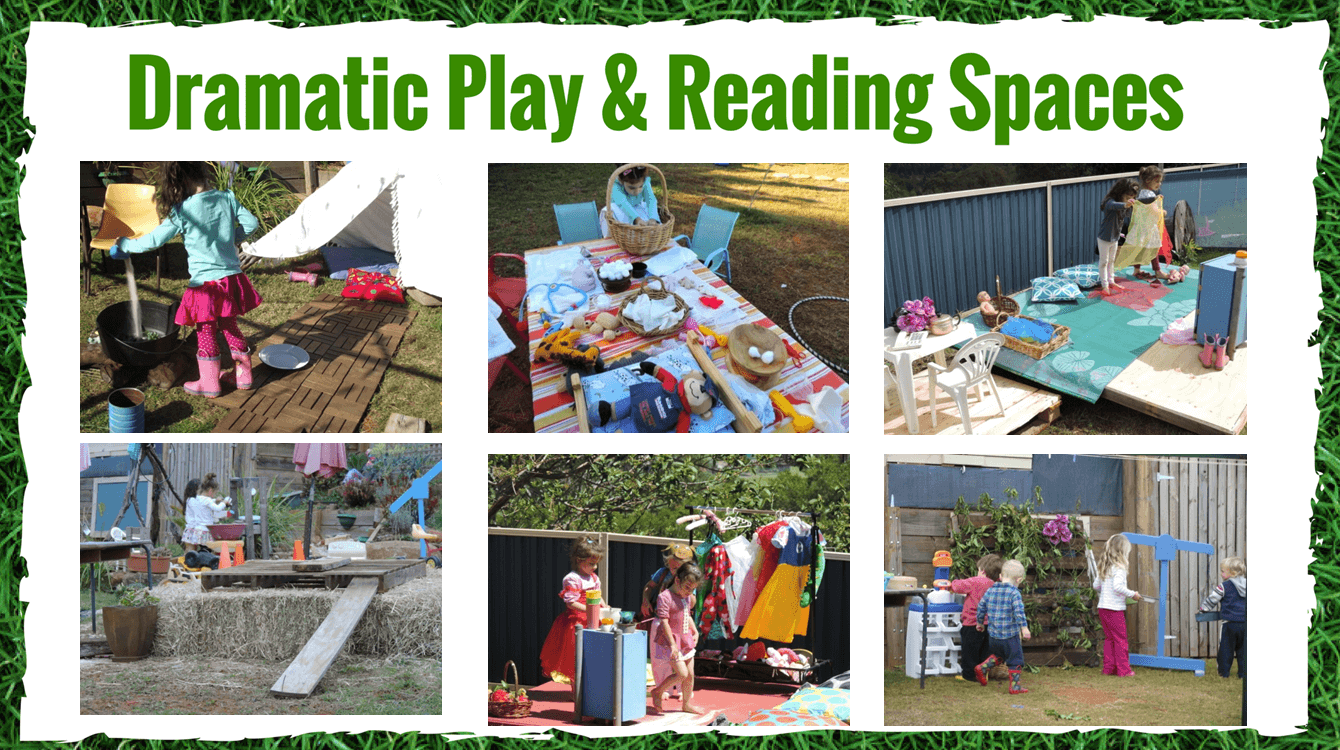
- Dramatic play and reading spaces – Even if you can't set aside a dedicated infinite like an outdoor stage for dramatic play – you can add a few outdoor cushions, a basket of gauzy cloth to curtain over trees, dress ups, props to explore and soft rugs to lay on with a book. Lots of ideas for taking dramatic play outdoors in this blog mail service.
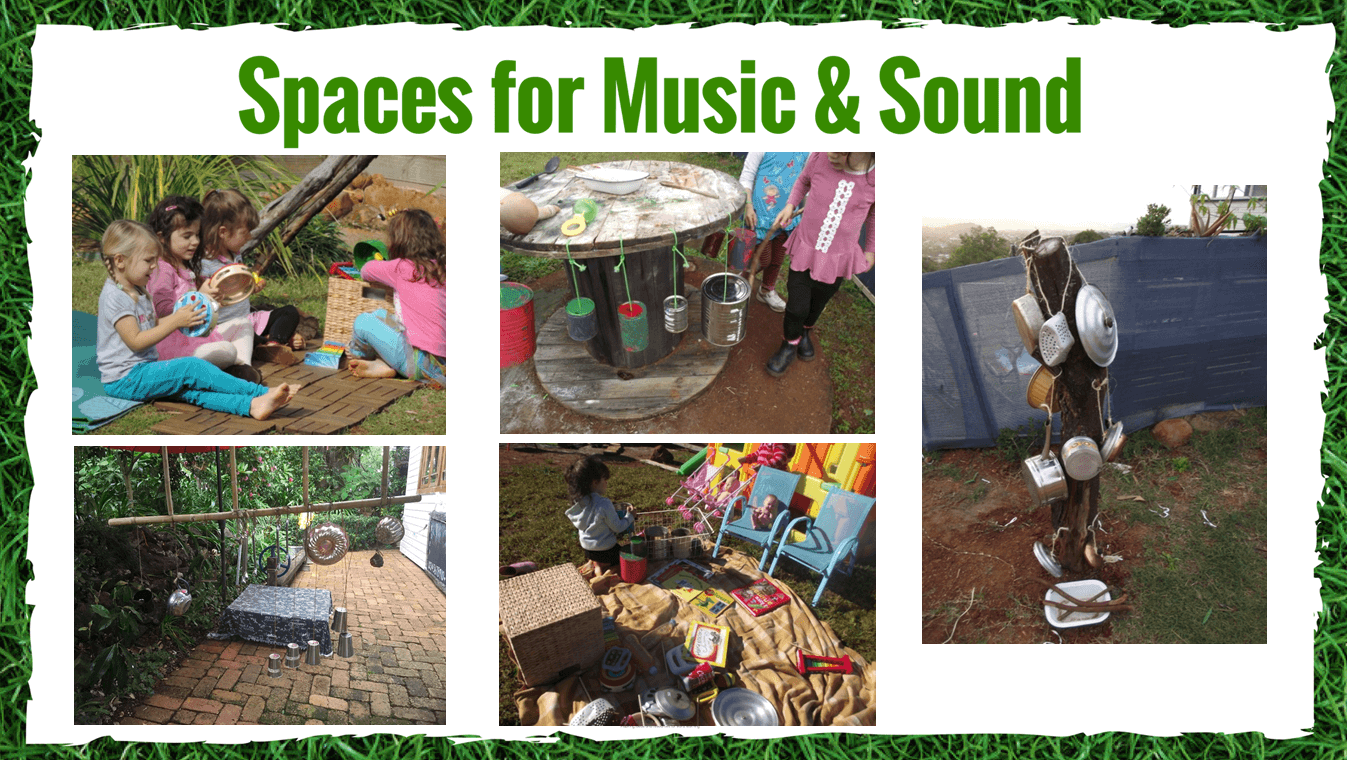
- Spaces for music and sound – think about making your own resource that include banging walls or trees, ormusical spools.
Step 2 – Equipping the outdoor space on a budget.
Tips to keep those equipment costs down.
- Learn bones tool and maintenance skills.
- Collect ideas & inspiration for upcycling & DIV projects to save coin buying new.
- Start with what y'all already accept & alter.
- Consider sustainability issues of just throwing out older equip and plastic.
- Go creative!Employ free or low cost materials like wooden pallets to turn into tables, seating, mud kitchens, dividers, garden beds and more!
- Turn household items into resource by thinking outside the box and getting artistic!
- Use low cost open concluded & recycled materials.
- Grow gardens from seed – save a seed library!
Where tin you detect budget friendly toys or materials to help you create DIY resource?
- Recycling & revolve centres.
- Garage sales, op shops, machine boot markets.
- Toy libraries
- Educator swap days
- Garden/landscaping/hardware stores
- Disbelieve & department stores (get inventive!)
- Treelopping & mulching services
- Industrial estates
- Tradespeople
- Local council
- Park, beach, bush-league visits.
- Postage & packaging materials (reuse)
- Cabinetmakers (wood offcuts & boards)
- Tyre shops – explore some dissimilar ways educators reuse tyres for play in this post.
Calculation fixed or non fixed equipment to the natural outdoor play surface area is ofttimes a widely debated topic in early babyhood circles at the moment but there are benefits to both and information technology really doesn't have to be ane or the other – especially when you lot are on a upkeep and need to retain and reuse some of your older equipment. It really isn't sustainable practice to just go rid of everything y'all already accept just considering it is no longer deemed worthy for outdoor play areas!
I really practice believe that balance is the key so first think near modifying, extending and upcycling what yous already take! I've added some pros and cons for both fixed and non fixed equipment to help you recollect exterior that box a little!
Fixed Equipment
- Can inadvertently limit inventiveness, motility, the urge to experiment & problem solve.
- Provides familiarity & stability to the infinite for children .
- They can add quick and easy to setup climbing, coordination & residuum challenges.
- Tin be natural materials or manufactured.
- Provides a base to extend upon with improver of open ended materials and resources.
- Tin help you to define and break upward spaces equally suggested to a higher place. Work with what you already take and define spaces from there.
- Tin offer secret, imaginary and serenity spaces with simply a few setup tweaks and additional materials.
- They will require ongoing maintenance & safety checks.
- Can definitely be expensive to purchase & relocate.
Non-Fixed Equipment
- Allows children to be curious, creative & directly their ain play.
- There are no rules or expectations to follow , no correct or wrong way to utilise the materials.
- A upkeep friendly resources option for educators, centres & schools.
- Like shooting fish in a barrel to source & extend on.
- Piece of cake to store & alter around regularly.
- Encourages creative thinking, problem solving.
- Supports children to experiment, investigate, problem solve and explore crusade and effect.
- Allows children of all ages to move, carry, redesign, recreate & combine materials.
- Supports early years schemas.
- Tin be of either natural or manufactured origin.
Think nearly how y'all are going to store your outdoor resources & equipment and likewise provide easy accessibility for the children.
Some strategies for you to consider..
- Avoid disorganisation & clutter
- Ensure selection of various range of materials.
- Label storage shelves, buckets, walls.
- Involve children in making labels -use drawings or photos.
- Set up to transport bulletin of 'I tin do things myself here'
- Organise for easy use, independence.
- Store like materials together -easy to find
- Keep loose parts easily accessible to move.
- Provide easy visual cues throughout space.
- Accommodate materials to use space wisely.
- Mix of closed and open storage.
- Program ahead on program to ascertain resources needed.
- If possible leave some outdoor spaces ready to … ,. 'play again' tomorrow to extend on interests.
For all of these ideas and a whole lot more why not download the Empowered Educator Outdoor Play Toolkit – A huge resources bundle of due east-books, posters and printables to help you plan for outdoor learning!
Pace iii – Including Natural Elements
Information technology doesn't need to exist an expensive or complicated procedure to introduce and include natural elements in your outdoor play expanse. Could you lot showtime with 1 or 2 of the elementary ideas below?
- Add access to natural items to extend everyday play experiences.
- Hang mobiles exterior made from nature items.
- Create textured pathways – pebbles, shells etc
- Add logs, branches, bamboo, rocks, gravel throughout the space.
- Constitute herb, vegetable & blossom gardens wherever yous take the space.
- Plant native trees to encourage local birds.
- Employ real mud, existent sand, real clay, existent plants.
- Identify baskets around the yard for collecting and proceed scavenger hunts together for nature items.
- Show children how to make their ain paints from sand, dirt, flowers.
- Use palm fronds to weave on fences.
- Use wooden stumps for seating & tables.
- Paint on woods, stones, logs, leaves, bawl.
- Grow plants from seed – collect seedpods.
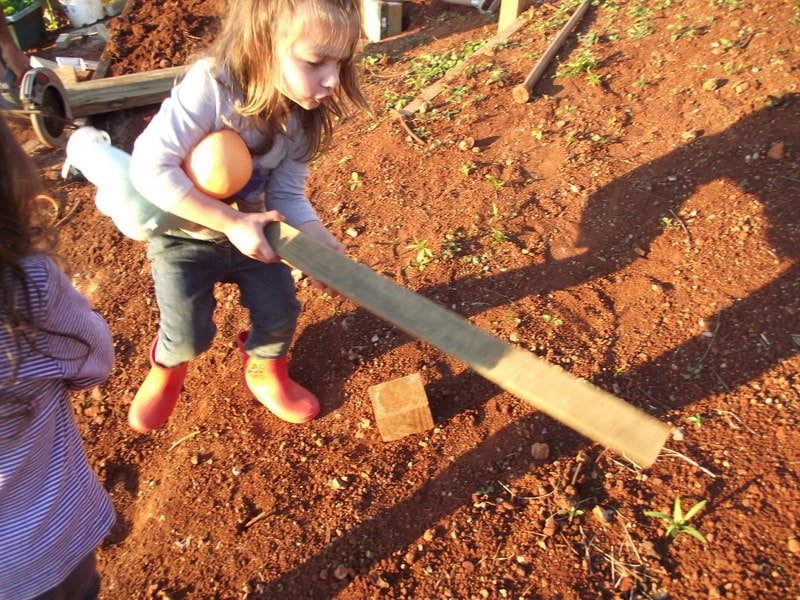
You don't need to effort and add everything all at in one case when modifying your outdoor play areas…create one design element and so piece of work in steps from at that place. Children can play in the infinite as you go along around them and so no demand to endeavour and await until everything is 'perfect'. They will love that big dirt pile!
Easy design ideas yous might like to endeavour.
Natural Shade Elements
Trees, leaves, branches, gardens offering respite from rut and dominicus.
Open Grassy Areas
To run, to exist noisy, to play games, to curlicue, to lie, to chase, to sit, to assemble.
Digging Patches
Space to build, to construct, to apply real tools, to problem solve, to fill, to carry, to tip, to cascade, to mix, to play.
Sand & Water Areas
Opportunities to get messy, explore with senses, role play, explore wise water employ, compare wet and dry, cook and create, mix with other materials to extend play.
Natural Climbing Challenges
Trees, fallen logs, wooden tree stumps, stone steps, grassy mounds, boulders & rock piles, twig cubbies & forts provide challenges without the demand for plastic fixed equipment
Gardens, Greenery, Natives
Plants, grasses & gardens can course those secret spaces, screen smaller areas, invite living creatures, provide food, develop responsibility, opportunities to explore cultures.
Mounds , Slopes, Tunnels, Tiers.
Uneven surfaces encourage children to claiming muscles, balance, coordination & creative thinking.
Fixed & Loose Natural Elements
Provide a choice of natural fixed materials as well every bit loose parts to encourage direction of own play, imagination, problem solving and discovery.
Sustainable Elements
Ponds, compost piles, vegetables, herbs, problems hotels, edible landscapes, waste systems worm farm, water conservation, recycled materials.
Simple Sensory Elements
Those that permit children to discover, experience, feel, touch, gustatory modality, see, hear and learn.
Outdoor Art
Audio gardens, murals, pathways, sculpture, display, gateways, sundials.
Stride 4 – Planting for Kid Friendly Outdoor Environments
Take the time to consider kid safety and the type of gardens, plants, pots and infinite you will utilize in your outdoor play expanse. I've compiled some ideas and inspiration you might like to consider to help yous with your blueprint planning below..
- Experiment with a diverseness of plants.
- Go along in mind surface area you live/weather/seasons.
- H2o wise planting. Mulches.
- Plants to abound quickly, harvest easily, and eat.
- Tough plants that will stand upwardly to knocks & trampling
- Beans & peas to create tee pees & tunnels.
- Add together plants to invite insects & garden creatures.
- Colourful flowers for craft, science & math games, display, painting with.
- Sunflowers to selection, save seeds, brand walls.
- Palm fronds make excellent materials for building with or making mats.
- Big copse that offer shade and spaces to relax (Apple.Mulberry, Mango are good!)
- Tall grasses and clumping shrubs to create smaller spaces and hidden areas (Liriope).
- Smaller sensory plants like mossy grass, furry succulents, mondo grass (expert for fairy gardens!)
For boosted reference you can download an splendid and comprehensive poisonous plants factsheet from Kidsafe hither and too from the Sydney Children'due south Hospital Network
I hope this helps yous to brainstorm thinking abouthow you can utilise simple pattern, natural materials and budget friendly resources to begin taking action to create that outdoor play area you really want.
In Role 3 of this serial I'll exist sharing some strategies and ideas to assistance yous overcome some of thosemutual outdoor play challenges similar shared spaces, minor spaces, baby/toddler areas and a whole lot more than that will leave you with no more excuses merely excited to take activity!
everettcareter1994.blogspot.com
Source: https://www.theempowerededucatoronline.com/2018/03/outdoor-play-areas-design-create.html/
0 Response to "what natural material plays a key role in the memorial to civil rights? water stone dirt sand"
Post a Comment